Our league does fantasy football the old way. Everyone gets the same budget, we sit in a garden and auction the players, and once you own a player nobody else can have him. The rest of the season ran on an ageing website, a spreadsheet and whatever the chairman could work out in his head.
I wanted to rebuild the whole thing, properly enough that 19 managers would trust it with their bragging rights.
The auction stays in the garden
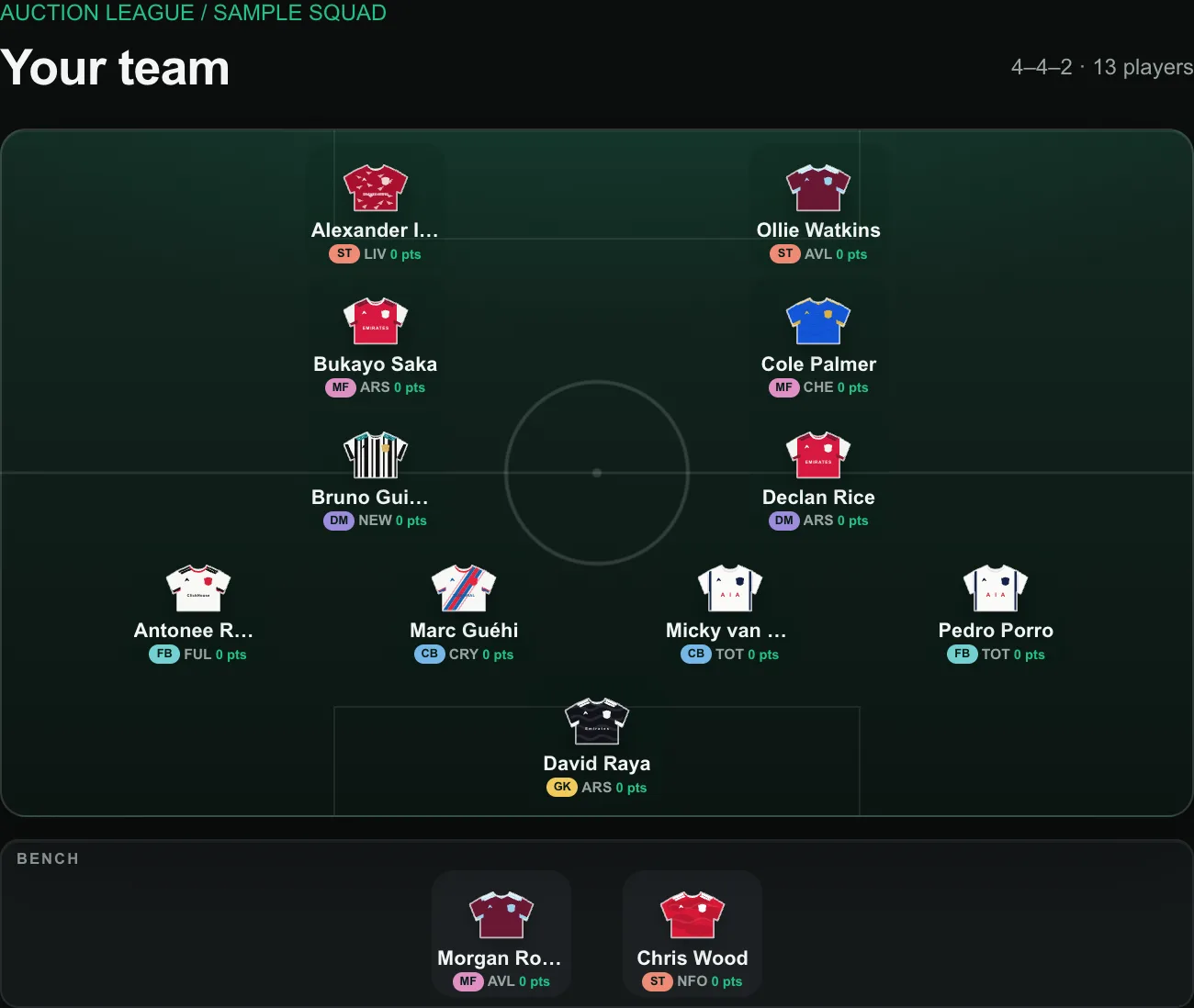
That was the first decision and it’s never moved. The app takes over once the squads are set: pick an XI before each kick-off, score each match from the official statistics, run swaps and sealed bids, keep the table.
Trust
The screens were the easy part. Every score has to be rebuilt from four stored facts, and anything ambiguous fails loudly. I imported everyone’s totals from the old site up to 29 August, let the app score everything after that and compared the two. A weekly check keeps comparing.
Agents and memory
Agents did almost all of the typing, so the documents mattered as much as the code: a short status page, one roadmap, a game guide in plain English and a decision record for every rule we argued about. New sessions read those first. That’s how a project this size stays coherent across well over a hundred agent sessions.
Selling it
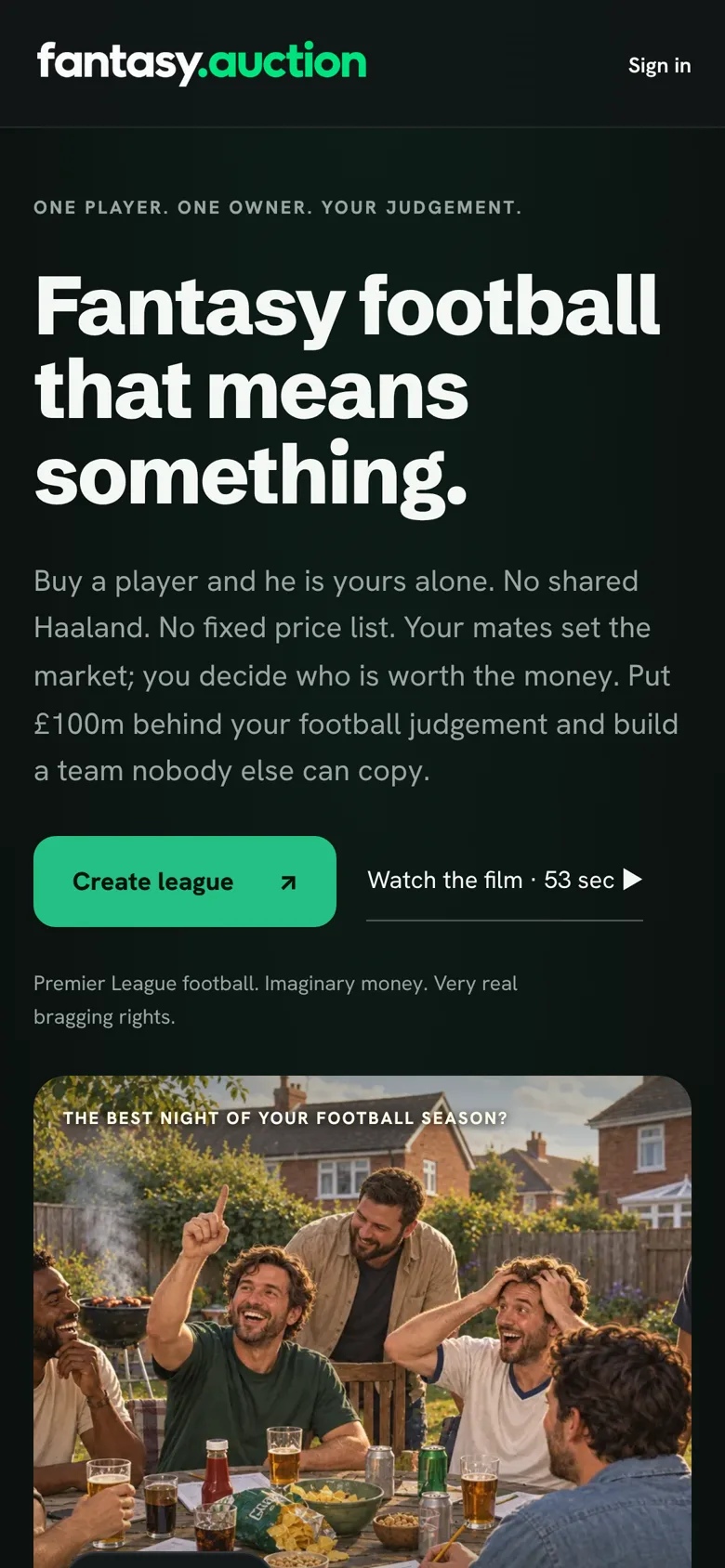
Then the sales job: a separate site at fantasy.auction, a guide library for organisers and two films made in Remotion, a 30-second auction-night story and a 53-second showreel.
Where it is
It’s live. It has scored all 19 teams since 29 August, running in parallel with our old setup this season. Self-service signup is open, and from next season the plan is real paying leagues and hobbyist groups as well as ours. The FPL feed still refuses a chunk of our requests, and we’re partway through a retry trial with a written rule for when to switch sources.